
How We Listen is How We Live
On music, openness, and the shape of our inner world
How we listen is how we live. Our playlists are gentle reflections of our inner world—what we allow into our ears often reflects what we allow into our hearts. The saying “you are what you eat,” expanded to “you are what you consume,” rings true for the media and sensory experiences we allow ourselves to access.
When Our Music Mirrors Our Inner State
In my work with individuals receiving intensive mental health care, a common “light bulb” realization I often encounter is: “My music does not support my mental health.” Lyrical content can reflect—and sometimes reinforce or trigger—the inner discontent we feel. Our music can lock us into habitual emotional patterns. To disarm this feedback loop of discontent and monotony, we sometimes need to gently interrupt the cycle.
Our music can lock us into habitual emotional patterns—or help us gently interrupt them.
Familiarity, Safety, and the Quiet Contraction of Our World
When we limit our listening to what is familiar, comfortable, and “like us,” our inner world can slowly contract without us noticing. Familiar sounds, regardless of content, feel safe—but safety can quietly become a boundary that keeps out difference, complexity, and new ways of seeing, learning, and connecting.
Safety can quietly become a boundary that keeps out difference and new ways of seeing.
Music as Empathy Training
Music from other cultures, generations, and identities doesn’t just expand our taste—it exercises our capacity for empathy. It trains the nervous system to sit with unfamiliar rhythms, languages, and emotional expressions without needing to control or categorize them. Over time, that same flexibility shows up in how we meet people, ideas, and difference in the world.
A Wider Soundtrack, A Wider Emotional Vocabulary
A changing soundtrack grows our emotional vocabulary. When our playlists include grief, rage, tenderness, protest, and joy—and we meet them with non-judgmental awareness—we practice emotional regulation and emotional intelligence. We become better at recognizing our own feelings and, in turn, more attuned to the feelings of others.
A varied soundtrack grows our emotional vocabulary.
Novelty, Neuroplasticity, and New Ways of Being
Novel sounds invite neural flexibility. New rhythms plant seeds for neuroplasticity, waking up curiosity, learning, and adaptability. Listening widely is a small, daily way to practice openness and new ways of being.
This Is About Curiosity, Not Judgment
Narrow music taste isn’t a moral failing. Familial belief systems, trauma, sensory sensitivity, neurodivergence, access, and culture all shape what feels tolerable or safe to hear. This is about exploration and expansion—not judgment. The invitation here is curiosity, and tuning into music as a spiritual self-care practice. Through this lens, we connect to something larger than ourselves. With an active listening practice, we can cultivate greater cultural humility, soften micro-biases, and deepen emotional granularity.
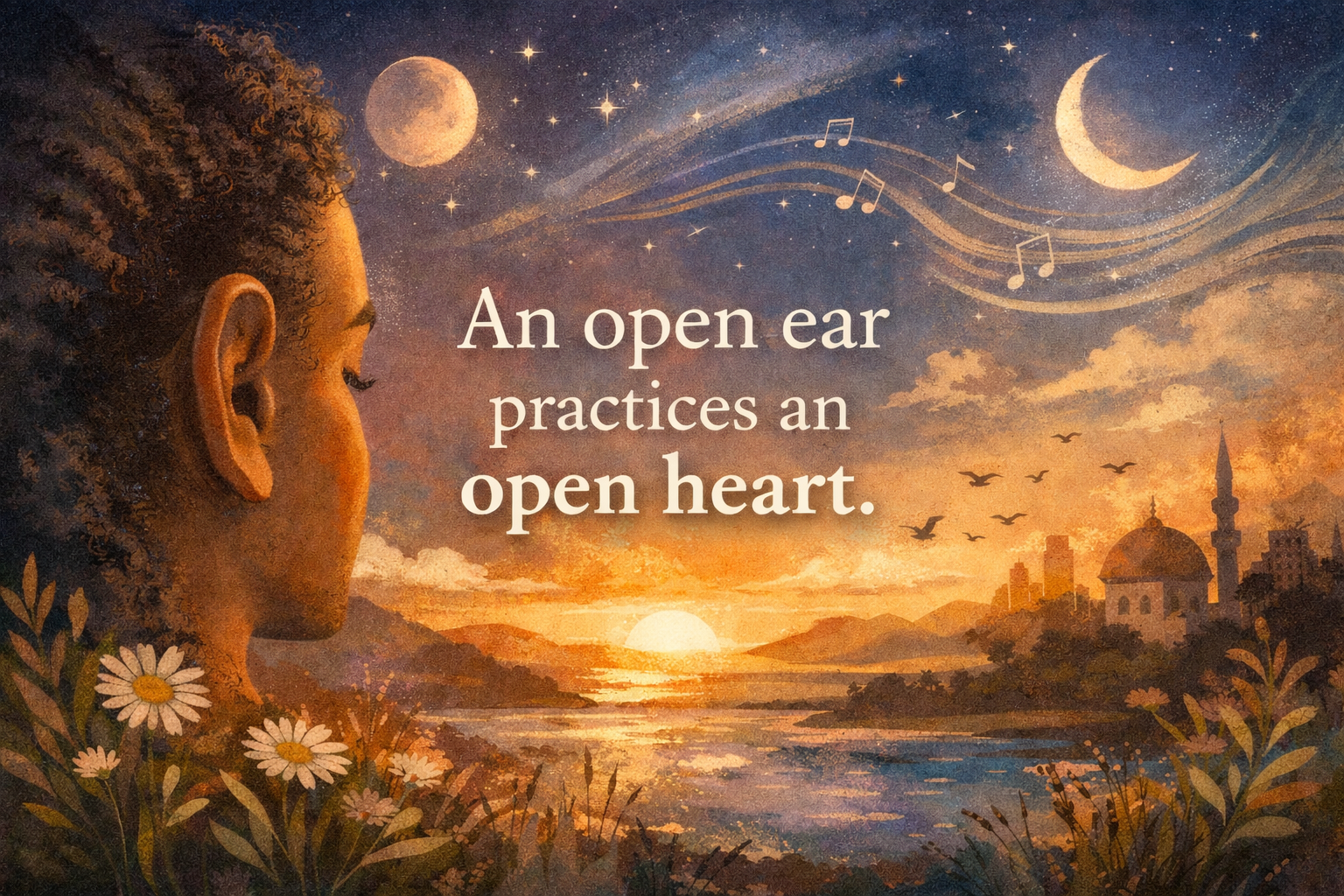
An open ear practices an open heart.
Try This (A 2-Minute Practice)
This week, try one unfamiliar genre or artist.
Don’t analyze it.
Notice your breath, your shoulders, your curiosity.
Let your body lead.
To Explore
What sounds feel “safe” to me—and why?
What emotions do I avoid in my playlists?
What’s one new sound I can meet with curiosity this week?
